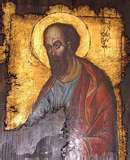
What Did Paul See? A Look at the Resurrection of Jesus and What Happened to Paul

chab123's avatarTHINKAPOLOGETICS.COM

Over the years, I have had my share of discussions about what we can know about Jesus. I think a good starting place about historical discussions about Jesus  is seen in the book The Resurrection of Jesus: A New Historiographical Approach by New Testament historian Mike Licona.[1]  In the book Licona discusses what is called “The Historical Bedrock.” These three facts about the Historical Jesus are held by most critical scholars and historians:

1. Jesus’ death by crucifixion

2. Very Shortly after Jesus’ death, the disciples had experiences that led them to believe and proclaim that Jesus had been resurrected and had appeared to them.

3. Within a few years after Jesus death, Paul became a follower of Jesus after a personal experience that he interpreted as a post resurrection appearance of Jesus to him.[2]

In this post, I want to focus on #3. After all…

View original post 3,411 more words

The Blow-Hard Bias of Inherit the Wind

“I’m frustrated!” The plea came in from a girl who was taking a required undergrad English course where the professor assigned an analysis of the 1955 play Inherit the Wind, which presents a fictionalized account of the famous Scopes “Monkey” Trial held in Tennessee thirty years earlier. For those of you that don’t know, substitute…

http://feedproxy.google.com/~r/ComeReasonsApologeticsNotes/~3/_qmLxAixr_Q/the-blow-hard-bias-of-inherit-wind.html

Has the Creator of the universe ever spoken to us?

Wintery Knight's avatarWINTERY KNIGHT

Has God every reached out to humanity? Has God every reached out to humanity?

People often ask the question, “why must I believe in Jesus and only Jesus in order to be rightly related to God?”

Indeed. Why should we care about the teachings of Jesus more than any other religious leader. Well, we know from scientific evidence that the universe had a beginning, and hence a Creator. We know from the fine-tuning argument that there is a Designer of the cosmos, as well. So the question becomes, has there ever been a human being who could give us accurate information about who the Creator and Designer is?

It turns that there is such a person, and we know it because we have evidence that this person rose from the dead – a feat only possible if the Creator and Designer wanted to draw attention to this person, and to his teachings. The account of this is recorded in…

View original post 655 more words

Why You Think the Way You Do: The Story of Western Worldviews from Rome to Home by Glenn Sunshine A review

Glenn Sunshine is a Professor of History at Central Connecticut State University, while also serving on the faculty of the Centurions Program of the Colson Center, and as the faculty advisor for Ratio Christi at CCSU. He has a BA in linguistics from Michigan State University, an MA in Church History from Trinity Evangelical Divinity School, an MA in Reformation History from the University of Wisconsin-Madison and a PhD in Renaissance-Reformation History from the University of Wisconsin-Madison. As a Christian and a historian, Sunshine has a passion for helping Christians see how worldview affects culture, and vice versa.

The thesis of Why You Think the Way You Do is that the history of Western Civilization can be traced according to its changing relationship to Christianity. Moreover, the successes and failures of Western culture can be linked to its acceptance or rejection of a Christian worldview.

The book opens with an explanation of the idea of worldview, and how it affects individuals and societies as a whole. It then traces the trajectory of Western culture from the Roman Empire, its transformation by the spread of Christianity, and the periods that followed. The chapters address major periods from the Middle Ages to the renaissance, to the modern “enlightenment” era, to the post-modern period to today. Sunshine shows how changes in worldviews impacted major events such as three great revolutions in England, France and America. This section was especially helpful to understand why the American Revolution succeeded where the Glorious Revolution, and the French Revolutions failed.

As history unfolds in more recent decades, we see the consequences of elevating personal autonomy to the point where ultimate freedom for all means little freedom for some. We see where the only thing considered immoral is considering something immoral. Moreover, we see how struggles for equality have become struggles for privilege by claiming victim status. We see tolerance become meaningless since tolerance entails disagreement, but disagreement is considered intolerance.

Sunshine has painted a clear picture of the consequences of the absence of the Christian worldview in the public square. While the history of Christendom is checkered with its wars of religion, Sunshine gives fair treatment of the issue, acknowledging excesses while noting where these diverge from Christian teaching.

It is not only society, however, that has lost a conscious Christian worldview. This is also missing in much of the Church. We in the church need to read this book and take its lessons to heart if we hope to have an impact on our culture.

This book is accessible to middle-school students, while being rich enough to not bore those with advanced degrees. Church youth leaders and students would do well to study this book. Our future as a nation may well depend upon it.
Lydia McGrew’s review of The Lost World of Genesis 1 by John Walton

http://whatswrongwiththeworld.net/2015/03/review_of_john_h_waltons_the_l.html

John H. Walton’s book The Lost World of Genesis One has (I understand) been very influential among evangelicals in leading them to believe that Scripture is compatible with a full acceptance of whatever mainstream science happens to declare concerning the origin of the world and biological life, including humans. In point of fact, this book says little about human origins; that subject is the topic of The Lost World of Adam and Eve. I have just received a copy of The Lost World of Adam and Eve in the mail and will be reviewing it next.

Mike Licona explains the As, Bs, Cs, Ds and Es of New Testament reliability

Wintery Knight's avatarWINTERY KNIGHT

Mike Licona is one of my favorite Christian apologists, and here is an excellent lecture to show you why.

In the lecture, he explains why the four biographies in the New Testament should be accepted as historically accurate: (55 minutes)

Summary:

  • What a Baltimore Ravens helmet teaches us about the importance of truth
  • What happens to Christians when they go off to university?
  • The 2007 study on attitudes of American professors to evangelical Christians
  • Authors: Who wrote the gospels?
  • Bias: Did the bias of the authors cause them to distort history?
  • Contradictions: What about the different descriptions of events in the gospels?
  • Dating: When were the gospels written?
  • Eyewitnesses: Do the gospel accounts go back to eyewitness testimony?

This is basic training for Christians. It would be nice if every Christian was equipped in church to be able to make a case like this.

View original post

Was early Earth’s atmosphere suitable for creating the building blocks of life?

Wintery Knight's avatarWINTERY KNIGHT

Do the Miller-Urey experiments simulate the early Earth? The Miller-Urey experiments

Biochemist Dr. Fazale Rana of Reasons to Believe offers some evidence.

Excerpt:

Today, the Miller-Urey experiment is considered to be irrelevant to the origin-of-life question. Current understanding of the composition of early Earth’s atmosphere differs significantly from the gas mix used by Miller. Most planetary scientists now think that the Earth’s primeval atmosphere consisted of carbon dioxide, nitrogen, and water vapor. Laboratory experiments indicate that this gas mixture is incapable of yielding organic materials in Miller-Urey-type experiments.

In May 2003 origin-of-life researchers Jeffrey Bada and Antonio Lazcano, long-time associates of Miller, wrote an essay for Science (May 2, 2003, pp. 745-746)commemorating the 50-year anniversary of the publication of Miller’s initial results.They pointed out that the Miller-Urey experiment has historical significance, but not scientific importance in contemporary origin-of-life thought. Bada and Lazcano wrote:

Is the “prebiotic soup” theory a reasonable explanation for the emergence of life? Contemporary geoscientists tend to…

View original post 704 more words

Connecticut Bluegrass Association

“The Connecticut Bluegrass Association — or CTBA — is dedicated to bringing together the bluegrass community in CT, promoting Bluegrass Bands, Education, Jams, festivals, and event Venues.”

Think Divinely

How you think changes everything

Theology in Motion

Knowing God Should Move You

Amanda Casanova

Writing about running, faith, and the trouble my two dogs get into

Quodlibetal Blog

Musings from Anywhere by Dr. Richard G. Howe

31 Days of Prayer

A month-long call to prayer and fasting

Bible Backgrounds

Research and Commentary from Dr. Craig Keener

Boon4You

If You Disagree With Me...You're Probably Wrong.