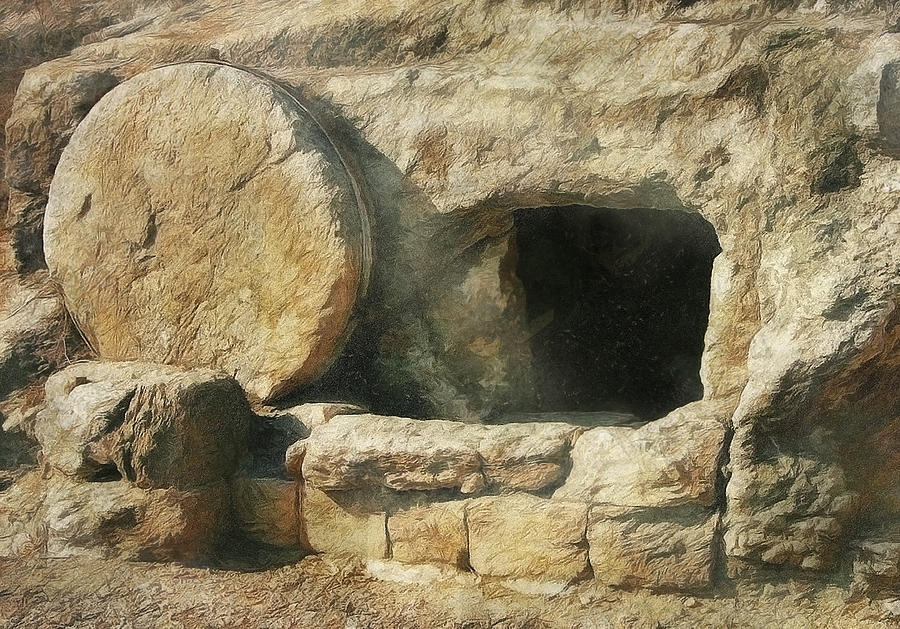
Egg On My Face: The Problem of Theological Claims Based On Experience


About a week ago, I posted the following on Facebook: “So, it turns out healing is a thing. I went to a healing service last night at Christian Life Church. I have had a hip injury for the past year or so, which I feel as low-back pain. As of last night, it is gone. Praise God!” How had I come to this conclusion? During the service, the speaker asked for those who needed healing to raise their hands, which I did. He then said, “Some of you need to let go of bitterness.” I felt a strong conviction that this applied to me, as well as a strong emotional reaction to the realization. When I acknowledge this, I felt a sensation in the area of my back where I have felt the symptoms of my injury. When I tested it, I felt no more symptoms. (I admit that the symptoms come and go, and are not continuously felt.) From these circumstances, I inferred that I had been healed. Based on my conviction that any healing I experience is not just for me, I shared this with the congregation and social media. Thursday morning, I realized I had made a humiliating error. My symptoms were back in full. It was clear that no such healing had occurred. Needless to say, my “quiet time” on Thursday was anything but. I would have been content to not have been healed (and I still am) but I felt really embarrassed. I was angry with God for “allowing” this to happen. In addition to the egg on my face, I was concerned about the reactions this would invoke by skeptics of divine healing. Two people in particular come to mind. One is a classmate from Biola who is skeptical of “faith healing” and the other is my wife. For them, I would point out that my experience of non-healing is no more proof that God does not heal than my (false) experience proved that He does. All this proves is that I was not healed. For those who are unconvinced of miracles in general and healings in particular, I would recommend Miracles by Craig Keener, and Miracles: What They Are, Why They Happen, and How They Can Change Your Life by Eric Metaxas. In these works, you will find more than ample evidence of the continuation of God’s miraculous work.

So why the buzz kill? Why not leave it alone? I need to set the record straight. I care about the truth. Even the Apostle Paul said that proclaiming the resurrection, if it did not happen, would be bearing false witness about God. Likewise, to leave the record uncorrected would be me bearing false witness about God.

I am content with or without my injury. It is annoying, not debilitating. My faith is in God, not in any particular favor he might do for me. He took the initiative to reconcile me to him by the person and work of Jesus Christ. He has already blessed me beyond measure.

God’s Not Dead 2: A Clarification

In my previous post, I made the statement that the Newsboys’ appearance was “was almost as contrived as Stobel and Wallace.” I want to be perfectly clear here (since I wasn’t in the original post.) What Strobel and Wallace had to say in their appearances in GND2 was not contrived. What I felt was contrived was the pretext for putting them on the stand. What they said was rock solid. I apologize (no pun intended) to both Lee Strobel and J. Warner Wallace, as they are both men for whom I have great respect.

God’s Not Dead… But the Movie Franchise?


This past weekend I saw the new movie God’s Not Dead 2. My expectations were tempered by having seen the first movie. For those who may not have seen it, the original God’s Not Dead was the story of a Christian college student who found himself having to chose between writing “God is dead” for a Philosophy grade, or go head-to-head with his atheist professor defending God’s existence. In that movie, the apologetic elements were a natural part of the central story of the movie. While the film suffered many of the problems common to “faith” films, such as the excessively happy endings with few loose ends, (what my pastor aptly called a “Hallmark-y” quality) it at least portrayed the value of apologetics for strengthening the faith of believers and giving non-believers something to think about. It was a decent storyline with a combination of fine performances and clichéd subplots. The sequel was another matter.

In GND2, a high school history teacher is disciplined and sued for quoting Jesus’ words in the context of a discussion of nonviolent protests such as that of Ghandi and Martin Luther King Jr. The first crack in the plausibility of this was the reaction of the teacher, played by Melissa Joan Hart. You are a history teacher answering a student’s question about Jesus’ influence on Ghandi and King, and when you are asked to defend your actions, your first reaction is “But, that is what I believe.” Really? It took half the trial for you to realize, “Hey, wait! I was teaching history, quoting Jesus as a historical figure.” And then it becomes necessary to have Lee Strobel and J. Warner Wallace testify that Jesus is a real historical figure? I’m a huge fan of both of these men, but I couldn’t help but feel like their parts in the movie were forced.

Then (spoiler alert) when the verdict is announced, the group of Christians praying in front of the courthouse starts chanting, “God’s not dead, he’s fully alive.” Really? I like the Newsboys, but their appearance in the movie was almost as contrived as putting Stobel and Wallace on the stand in the trial.

Joining the list of disjointed subplots was a meeting of local clergy chaired by the late Fred Thompson announcing that the local prosecutor was subpoenaing their sermon notes, a subplot that went undeveloped in the rest of the movie beyond a threat by the prosecutor directed at the lone pastor who refused. Was this a case of “throw everything at the wall and see what sticks,” or the premise for a GND 3?

Lest you think I found nothing good in this movie, let me say what I liked. There was a character in the first movie, a left-wing blogger who was diagnosed with cancer. She (along with almost everyone else in the first movie) became a Christian. In the sequel, she discovers she has been healed. While this is an uplifting (if predictable) part of the story, I appreciate that the Hallmark factor was dialed back, and she was portrayed as struggling with doubts about her faith right after the healing. This was one of the most realistic things in the movie. Additionally, the main character retells how she heard God speak to her. I hear many people claim this, saying God told them a, b, or c, and you are left to think, ”Okay, I guess.” There is nothing in the alleged message that can be tested, and they show not miraculous power to attest it. I will not engage in a debate over whether God gives personal messages to individuals (he certainly can if he wishes.) It is not at all clear, however that Scripture teaches that we can expect him to. However, when asked what God told her, she said, “Who do you say I am?” This is a direct quote of Jesus from Matthew 16:15. The Bible clearly teaches that God will “bring to remembrance all I have taught you.” I admit some would question how I am using that quote, but the point is, it is entirely reasonable to think the Holy Spirit will bring to mind passages from what God has already said.

God’s Not Dead 2 looks and feels like it was made in the Bible Belt, for the Bible Belt. However, many of us, including me, live up here in the plumber’s butt crack sticking up over the Bible Belt. We long for the day when a movie is made that presents the Christian worldview that is not cheesy and heavy-handed, and does not rely on clichés of the Christian subculture.

Proverbs 16:22 says, “Like a gold ring in a pig’s snout is a beautiful woman who shows no discretion.” This proverb uses the incongruity of gold rings and pig’s snouts to make a point. I am not comparing the movie to a beautiful woman who shows no discretion. However, the incongruity of fine individual performances with a disjointed story line seem just as stark.


So Now I’m a Christian. Now What? Part 6: The Incarnation Continued

“Okay, so Jesus is one person with two natures, one divine and one human. And the point of all this…?


How important is it that God became flesh? To borrow a phrase from the Apostle Paul, “great in every way!” First, as a man, God himself experienced suffering, and therefore can sympathize with our weakness. (Hebrews 4:14) He knows by experience what it means to be tired, to grieve, to hunger and thirst, and most of all, he knows what it means to suffer injustice. The only truly innocent man that ever lived was falsely accused of a capital crime and executed.

Even more importantly, however, by living his life perfectly obedient to God, and because of his death, which he experienced willingly, Jesus fulfilled the requirements of the Law both by obedience, and by providing a substitute for sin. In the Old Testament, sins had to be atoned for by the death of an innocent substitute. This usually meant an animal. This is why John the Baptist called Jesus the “Lamb of God.” Because he lived perfectly, he had no sin of his own to pay for. One way we can know that is because he didn’t stay dead. About 40 hours after he was buried, Jesus rose from the dead. As Paul said, “He (God) made Him (Jesus) who knew no sin to be sin on our behalf, so that we might become the righteousness of God in Him.” By coming to faith in Jesus, we become united with him. Because of this union, we die with him, and are raised again (spiritually now, bodily later) so that he takes on our sin, and gives us his righteousness.

Finally, because he rose from the dead, we can trust him to raise us at the end of the age just as he promised. This life, no matter how pleasant or painful, is extremely short compared to the eternity we will live. This is why Paul could say, “For momentary, light affliction is producing for us an eternal weight of glory far beyond all comparison.” (2 Corinthians 4:17)

God became flesh and lived among us, and died for us. Because of this, we are reconciled to God, and have hope in the resurrection, and eternity in the New Heavens and New Earth (2Peter 3:31) He promised, and he is able to come through. How do we know? We know because he rose from the dead. He is risen! He is risen indeed!


Science or Theology: Must We Choose?


Have you ever gone one Amazon.com to look at a book, looked at the reviews and saw a lot of one-star reviews, which when you read them you know the reviewer did not read the book? I hate that. If you are going to post a “review,” it should reflect the book and your interaction with it. Having said that, it is with all due respect that I comment here on a book I have never read. Actually, it is not about the book, but about the approach the author took, which I have seen before, and I think it is problematic.

Michael Guillen has published a book called Amazing Truths. As I stated above, I have not read it, but I heard Dr. Guillen discuss the book with Eric Metaxas on the Eric Metaxas Radio Show. Guillen seeks to show how the Bible and science are compatible. I have no quarrel with the idea that there is no conflict between the Bible (rightly understood) and science (rightly understood.) My concern is how authors like Guillen will display really poor theology and even philosophy in their arguments. In Guillen’s case, he argues that the idea that absolute truth exists is a point of compatibility between science and the Bible. Well, it is true that both scientists and theologians affirm absolute truth, neither science nor the Bible tell us this. The Bible and science both presuppose objective truth. You can’t do either without it. Granted, this is a nit picky point. However, of a more serious nature is Guillen’s attempt to explain how God who is “far away” can hear prayers immediately by appealing to quantum entanglements. It is not necessary to understand what quantum entanglements are. The idea is about instant communication over great distances. If you understand some basic theology, you would not even go there. If God is omnipresent, which he is and he has been understood to be for, oh I don’t know, the last 3000 YEARS, then he is never “far away.” Moreover, if he knows the end from the beginning, which he does, he does not need to wait until you pray to know what you will ask for or how he will act in response. In fact, you can find a wonderful story that illustrates this on pages 17-18 of Kingdom Triangle: Recover the Christian Mind, Renovate the Soul, Restore the Spirit’s Power.[3]

I don’t mean to take away from what Guillen is trying to do. He is trying to show Christians and non-Christians alike that choosing Christianity does not entail rejecting science. However, if he is going to write as an expert, he needs to be sure he covers all his bases. What he does here is similar to other scientists who are Christians. Hugh Ross has also made similar errors in trying to use his scientific background to explain God’s capacities. In Ross’ case, he appeals to multiple time dimensions to explain prayer. This is unnecessary for the same reasons stated above.[4]

Scientists who wish to employ their expertise in the service of Christian apologetics would do well to become better informed theologically. At least they should consult with a theologian they trust to get feedback.

/rant


“Doubting Thomas” Can’t Catch a Break

Preachers love to use “Doubting Thomas” as a negative sermon illustration (my church’s NextGen pastor excepted) but why does everyone point the finger at him? Who did he doubt? None of the gospel accounts of the resurrection place Thomas at the tomb. He wasn’t there when Jesus first appeared to the 10 (11 counting Thomas.) But was he the first skeptic among the disciples that day? Luke 24 contains a report of the women finding the empty tomb and encountering the risen Jesus. What happened when they reported this to the apostles? “…the other women with them were telling these things to the apostles. But these words appeared to them as nonsense, and they would not believe them.” (Verses 10b-11) What? They would not believe? Who’s doubting now? In the Gospel of John, when the disciples heard the report that the tomb was empty did they believe? No, they went and investigated, and then they believed. (Again, no mention of Thomas being there.) In both accounts, the disciples did not believe the report until they investigated for themselves.

Fast forward to Sunday night, and Jesus appears to the ten. Afterwards, the ten tell Thomas what they saw, and he refuses to believe. How is he any different?

It can be argued that after hanging out with the other ten guys for the last three years or so that he should have given them the benefit of the doubt. To be fair, however, this was a truly unique event in history. Moreover, it was a unique event that had direct personal implications. All 11 were grieving Jesus’ death. With the exception of those people they had seen Jesus raise from the dead (in a manner very different from Jesus’ own resurrection) they recognized that typically people tended to stay dead, especially when they die by crucifixion. However, just because Thomas had the boldness to say what the other 10 were thinking just that morning is no reason to single him out as a hardened skeptic. Thomas was in good company.

Answering Jihad: A Better Way Forward by Nabeel Qureshi. A Review

Author

Nabeel Qureshi is a former Muslim, now a Christian, and author of three books Seeking Allah, Finding Jesus: A Devout Muslim Encounters Christianity, and No God But One: Allah or Jesus and the work under review. He holds an MD from Eastern Virginia Medical School, an MA in Christian apologetics from Biola University, an MA in Religion from Duke University, and is currently pursuing a doctorate in New Testament Studies at Oxford University. Qureshi is also an itinerant speaker for Ravi Zacharias International Ministries. His desire in writing this book is encourage people to think carefully about Islam, responding without naiveté or undue fear.

Synopsis

Answering Jihad is organized into three categories, in which Qureshi answers the 18 most common questions he is asked regarding Islam and Christianity. Part 1 gives an introduction and historic overview of the concept of jihad. Part 2 addresses the practice of jihad today, and Part 3 deals with the differences between Islam and Christianity with respect to violence. The end of the book contains some appendices that explain more about Islam in general, as well as the particular sect to which Qureshi’s family belongs.

Analysis

In Part 1, Qureshi offers a compelling argument for the idea that those who practice violent forms of Islam are far more consistent with the teachings of the authoritative, foundational documents and the actions of the founder of Islam. He shows from historical context, as well as the documents themselves, that jihad is properly understood as violent warfare.

In Part 2, Qureshi explores the resurgence of jihad in modern times. His explanation of how moderate Muslims receive their traditions, which is far different from the Protestant tradition of Sola Scriptura. For Muslims, their Imams carry far more authority than an equivalent leader in Christianity. Therefore, if the Imams are teaching Islam as peaceful, then Islam is peaceful. This is especially helpful in light of claims made by some that all peaceful Muslims are merely employing Taqiya, or deception. However, with the advent of the Internet, Muslims have unprecedented access to their foundational documents, the Quran and the Hadiths, which teach a more aggressive Islam. Qureshi notes that exposure to these documents leads to a crisis of faith for these Muslims. They must choose apostasy, violence, or to live in cognitive dissonance.

In Part 3, Qureshi responds to questions and challenges about the seeming similarities and differences between Islam and Christianity. Here he does a good job of differentiating jihad from Old Testament warfare. I thought, however, he could have done a little more research into Jesus’ teaching on “turning the other cheek.” Qureshi claims this is an injunction against even self-defense. However, as J. Warner Wallace points out, “When Jesus told His followers to “turn the other cheek,” He was referring to personal retaliation rather than to responses related to criminal offenses or actions related to military force.” Wallace’s comment was in response to the idea that “turn the other cheek” was a command to be pacifist, but I think it can be applied to self-defense, though not retaliation. One other issue I would take would be with Qureshi’s response to the Crusades and the reports of the taking of Jerusalem. As Rodney Stark points out, “the commonly applied ‘rule of war’ concerning siege warfare was that if a city did not surrender before forcing attackers to take the city by storm (which inevitably caused a very high rate of casualties in the besieging force), the inhabitants could expect to be massacred as an example to others in the future.” (God’s Battalions, 168.) This is not to argue that Christians are to behave this way, but to expect Christians sent to war in medieval times and expecting them to conduct themselves by modern standards is unrealistic. That simply was how wars were fought. It was not a uniquely “Christian” practice.

Qureshi concludes by reminding us that we need to realistic in our view of Islam, while charitable toward Muslims. If we wait until our Muslim neighbors reach that “three-pronged fork in the road” to reach out to them, it may be too late. This point cannot be overemphasized. As Christians, we need to see Muslims as people for whom Christ died.

Recommendation

Despite my nit picking, I highly recommend this book. It is accessible for anyone from late middle school and meaty enough for a graduate student. It is a must read for anyone hoping to have a meaningful interaction with their Muslim neighbors.


Is God a Good God? What Does That Even Mean?

This past Sunday, my pastor preached a message in which he encouraged people to remember, “God is a good God” when they experience suffering or difficulty. This is a wise counsel. However, what does it mean? I know it means God is good and not evil, but what does “good” mean? Is there some standard that stands above God, which he meets, and therefore is good? Or, is he good because there is more about him that we like than that which we don’t? How we answer this question is extremely important. In fact, I would argue that if God is not good, then good itself does not exist. If God is not good, then “good” can only really mean, “I like it.” If good is nothing more than “I like it,” then evil can be nothing more than “I don’t like it.”

Some have argued that good things are good because “God says so.” Then they say that God could have called what we think of as evil “good” if he wanted to. Therefore, these are arbitrary categories. On this view, good simply means, “God likes it” and evil means “God doesn’t like it.” There is nothing really good or evil in and of itself. These are mere statements of preference, either ours, or God’s. If you think about this, and you consider things you care deeply about, such as the wrongness of genocide, or the rightness of self-sacrifice, you will find neither of these explanations satisfying.

When you think of genocide, you not only think it is evil, you think everyone ought to agree. In fact, if someone disagrees, you think there is something wrong with that person. When you here stories of self-sacrifice, you want to celebrate, and encourage others to follow the example. How do we explain this? It is because God is good.

If you have been to an evangelical church in the last few decades, you have probably heard “God is good” so many times it might seem like a cliché. However, I want to encourage you to think of it a little differently. “God is good” can be understood more than one way. Typically, it is understood that “good” is an adjective that describes God, and it is. That is one way to take the statement. Here is another way, and I want you to wrap your mind around it. “God is good” also means that God is the very standard by which we call anything else good.

Before I unpack that, let me clarify what I mean by good. There is another way “good” is commonly used. It is used to mean, “Well suited for its intended purpose.” However, you could easily see how something can be good in this sense, but not good in a moral sense. For example, a hollow-point bullet is well suited for doing maximum damage to a living organism into which it is fired. It is a good bullet, in this sense. However, no one in his or her right mind would think such a bullet striking an innocent person would be a good thing.

The definition above, however is not far off the mark (no pun intended.) I would argue that when God declared his creation “good” in Genesis 1, he meant that it was well suited to the purpose for which he created it. The important difference is that God’s purposes are always good, because he is good. Here I mean he is good in that he is the embodiment of good. Good in this sense that which reflects God’s character. God is good by nature. As such, whatever he commands is good because his commands express his nature. Therefore, whatever he commands us to do, it is good to do it. Whatever he forbids us from doing, it is evil to do those things.

It may be helpful at this point to say something about evil. Evil is not a thing or a force in and of itself, just as cold or darkness is not a thing. Just as darkness is a lack of light, and cold is a lack of heat, evil is a lack of good.

God is good. This is the standard by which we rightly call anything else good. The difficult thing to realize is that if God allows us to suffer, in the end, it is good. God promises “all things work together for good to those who love him and are called according to his purpose.” (Romans 8:28) This does not always mean we will see that good any time soon after some painful thing happens. It may not be until you stand before God and look at your entire life that you see how that thing is used for your good. However, since our lives here on earth are SO short compared to our life in eternity, we will see how these truly are what Paul calls “light and momentary afflictions.” (See 2 Corinthians 4:17)

God is good. If you deny this because of bad things happening to you or those you love, you are denying the very meaning of the word. All you are left with is “I don’t like this…” Is that really a preferable alternative?


So Now I’m a Christian. Now What? Part 5: The Incarnation

“Incarnation? What do flowers have to do with anything?”

Not, carnation, incarnation. It means God took on flesh in Jesus Christ. We read in John 1:

“In the beginning was the Word, and the Word was with God, and the Word was God. He was with God in the beginning.  Through him all things were made; without him nothing was made that has been made… The Word became flesh and made his dwelling among us.” (Verses 1-3, 14)

It is clear from verses 1-3 that “the Word” is God. In verse 14 we are told he became a man. This is not to say that God changed from being God to being a man. Rather, God added to himself a human nature.

You will remember that in part 1 I said God does not change.

“Really? You don’t think “becoming a man” is a change?”

When I explained the difference between “essential” attributes and “accidental” attributes, you will note that “not having a human nature” was not an essential property. God did not have to take on flesh. Moreover, none of his attributes changed. If they did, it would have been called an “intrinsic” change. That means a change in his nature or being. Adding to himself a human nature, or more precisely, the second Person of the Trinity adding to himself a human nature did not change the nature of the second Person. He is still divine, still omnipresent, omniscient, omnipotent, etc. Adding to himself a human nature is what is called an “extrinsic change.”

In order to make sense of what it means for the divine Person to “add to himself a human nature,” we need to unpack what a human nature is.

A human being is a body/soul unity. This means you are a soul and you have a body. I know some people think we are a body, soul and spirit. For our purposes here, we will leave aside that debate. Suffice it to say we are made of two substances; a material body, and an immaterial soul. (If our spirit is a third part, it is still immaterial, so the debate is not relevant for this point.)

“What do you mean ‘immaterial?’ Like it doesn’t matter?”

No, by immaterial, I mean non-material. In other words, our soul has no weight, mass, and does not extend in space. It cannot be detected with the five senses. It is not made of physical matter or energy. Included in our soul would be things like the mind, the will, emotions, and personality. Our person-ness is in our soul. Moreover, there is good reason to think the soul directs the physical development.

“Isn’t the mind just the brain?”

No. It is beyond the scope of this essay to explain. The brain is part of the body, and is the primary interface between the soul and the body (except for development, and possibly another aspect which will take us too far down a rabbit trail to explain now.)

As human persons, our consciousnesses, our thoughts and feelings, are informed from two sources; our bodies and our souls. For example, when our bodies need energy, our brain tells us we are hungry. If we eat a cheeseburger, our brain then tells us we are not hungry. However, there is another aspect of this process that is not physical. Two people can get hungry and eat a cheeseburger. One really likes cheeseburgers and therefore, enjoys his meal. The other may find he hates cheeseburgers and vows never to eat one again. In both cases, there reaction was emotional. To put it another way, souls cannot chew cheeseburgers and bodies cannot enjoy them.

“What does all this have to do with Jesus?”

Glad you asked. Remember I said that in Jesus Christ, the second Person of the Trinity took on a human nature. That means he added to himself a human body and a human soul. There is one very important difference, however. You will note I said, “Our person-ness is in our soul.” In Jesus, this is not the case. Jesus is just one person, or Person. His human soul had its “person-ness” by being in union with the second Person of the Trinity. Moreover, Jesus’ consciousness has three sources, rather than two. As the second Person of the Trinity, he shares an intellect, will, and emotions with the Father and the Holy Spirit. There is one divine Mind, Will and Emotions. So his consciousness is informed by the divine mind, will, and emotions. Also, it is informed by his human mind, will, and emotions. Finally, his consciousness is informed by his body.

“But when they asked Jesus when he would come back he said, ‘But about that day or hour no one knows, not even the angels in heaven, nor the Son, but only the Father.’”

As a divine Person, he would choose what to reveal to his human consciousness. The second Person of the Trinity is only referred to as “Son” in and since the incarnation. Understanding this union of God and flesh also makes sense of what Jesus meant when he prayed, “…not my will, but yours be done.” God only has one will. However, Jesus had a human will as well.

I realize this post could get technical. Please feel free to post questions about anything here you don’t understand. In my next post I will explain why all this was necessary.

Part 5: The Incarnation


“Incarnation? What do flowers have to do with anything?”

Not, carnation, incarnation. It means God took on flesh in Jesus Christ. We read in John 1:

“In the beginning was the Word, and the Word was with God, and the Word was God. He was with God in the beginning.  Through him all things were made; without him nothing was made that has been made… The Word became flesh and made his dwelling among us.” (Verses 1-3, 14)

It is clear from verses 1-3 that “the Word” is God. In verse 14 we are told he became a man. This is not to say that God changed from being God to being a man. Rather, God added to himself a human nature.

You will remember that in part 1 I said God does not change.

“Really? You don’t think “becoming a man” is a change?”

When I explained the difference between “essential” attributes and “accidental” attributes, you will note that “not having a human nature” was not an essential property. God did not have to take on flesh. Moreover, none of his attributes changed. If they did, it would have been called an “intrinsic” change. That means a change in his nature or being. Adding to himself a human nature, or more precisely, the second Person of the Trinity adding to himself a human nature did not change the nature of the second Person. He is still divine, still omnipresent, omniscient, omnipotent, etc. Adding to himself a human nature is what is called an “extrinsic change.”

In order to make sense of what it means for the divine Person to “add to himself a human nature,” we need to unpack what a human nature is.

A human being is a body/soul unity. This means you are a soul and you have a body. I know some people think we are a body, soul and spirit. For our purposes here, we will leave aside that debate. Suffice it to say we are made of two substances; a material body, and an immaterial soul. (If our spirit is a third part, it is still immaterial, so the debate is not relevant for this point.)

“What do you mean ‘immaterial?’ Like it doesn’t matter?”

No, by immaterial, I mean non-material. In other words, our soul has no weight, mass, and does not extend in space. It cannot be detected with the five senses. It is not made of physical matter or energy. Included in our soul would be things like the mind, the will, emotions, and personality. Our person-ness is in our soul. Moreover, there is good reason to think the soul directs the physical development.

“Isn’t the mind just the brain?”

No. It is beyond the scope of this essay to explain. The brain is part of the body, and is the primary interface between the soul and the body (except for development, and possibly another aspect which will take us too far down a rabbit trail to explain now.)

As human persons, our consciousnesses, our thoughts and feelings, are informed from two sources; our bodies and our souls. For example, when our bodies need energy, our brain tells us we are hungry. If we eat a cheeseburger, our brain then tells us we are not hungry. However, there is another aspect of this process that is not physical. Two people can get hungry and eat a cheeseburger. One really likes cheeseburgers and therefore, enjoys his meal. The other may find he hates cheeseburgers and vows never to eat one again. In both cases, there reaction was emotional. To put it another way, souls cannot chew cheeseburgers and bodies cannot enjoy them.

“What does all this have to do with Jesus?”

Glad you asked. Remember I said that in Jesus Christ, the second Person of the Trinity took on a human nature. That means he added to himself a human body and a human soul. There is one very important difference, however. You will note I said, “Our person-ness is in our soul.” In Jesus, this is not the case. Jesus is just one person, or Person. His human soul had its “person-ness” by being in union with the second Person of the Trinity. Moreover, Jesus’ consciousness has three sources, rather than two. As the second Person of the Trinity, he shares an intellect, will, and emotions with the Father and the Holy Spirit. There is one divine Mind, Will and Emotions. So his consciousness is informed by the divine mind, will, and emotions. Also, it is informed by his human mind, will, and emotions. Finally, his consciousness is informed by his body.

“But when they asked Jesus when he would come back he said, ‘But about that day or hour no one knows, not even the angels in heaven, nor the Son, but only the Father.’”

As a divine Person, he would choose what to reveal to his human consciousness. The second Person of the Trinity is only referred to as “Son” in and since the incarnation. Understanding this union of God and flesh also makes sense of what Jesus meant when he prayed, “…not my will, but yours be done.” God only has one will. However, Jesus had a human will as well.

I realize this post could get technical. Please feel free to post questions about anything here you don’t understand. In my next post I will explain why all this was necessary.

Philosophy In Seven Sentences By Douglas Groothuis: A Review

The author

Douglas Groothuis is professor of Philosophy at Denver Seminary. He earned his PhD at the University of Oregon and he specializes in Philosophy of Religion, the History of Philosophy and other areas. Dr. Groothuis is the author or editor of 13 books including

Christian Apologetics: A Comprehensive Case for Biblical Faith, Truth Decay: Defending Christianity Against the Challenges of Postmodernism, and In Defense of Natural Theology: A Post-Humean Assessment in addition to the title under review here. Groothuis is passionate about careful thinking as an element of worship.


Thesis

In Philosophy In Seven Sentences, Groothuis seeks to make philosophy a little less intimidating and esoteric to the uninitiated, while demonstrating the need to think well in order to live a good life. He does this by introducing the work of seven philosophers with quotes that embody their work. Each chapter fleshes out the ideas behind the sentences, as well as some background information on the philosophers to whom they are attributed.


Synopsis

In chapter 1, Protagoras’ claim “Man is the measure of all things: of the things which are, that they are, and of things which are not that are not” is examined. Groothuis notes how this idea has some merit, but pressed to its logical conclusion, it leads to the inability to know anything.

In chapter 2, we hear from Socrates, “The unexamined life is not worth living.” Groothuis notes that this is a hyperbolic statement, urging the hearers to seek truth by which to live, which requires comparing one’s life to that truth.

In chapter 3, Aristotle tells us, “All men by nature desire to know.” In service of this belief, Aristotle formulated the laws of logic, especially the Law of Noncontradiction. Groothuis points out that knowledge is impossible if we cannot escape contradiction.

In chapter 4, Augustine’s quote, “You have made us for yourself, and restless is our heart until it comes to rest in you” is examined. Augustine came to this realization, which he wrote in Confessions, as he reflected on his life and the process through which he became a Christian. He argues that humans feel a real guilt, stemming from an awareness of objective morality, and since the only remedy for this guilt is in God’s provision, rest can only be found in him.

In chapter 5, Groothuis analyzed Descartes’ quote “I think, therefore I am.” Descartes was searching for something he could know with certainty, and he found one such item in the realization that thinking requires a thinker. Descartes also devised an argument for God from the fact that the idea of God is innate and therefore implanted by God. Groothuis also notes Descartes’ contribution to the mind-body problem.

In chapter 6, Pascal’s quote “The heart has its reasons of which reason knows nothing” is unpacked. Like many references to “the heart” in older (and even ancient) literature, this one is often misunderstood. Rather than pitting emotion against intellect, Pascal was pointing to basic beliefs, and first principles on which all other beliefs depend.

In chapter 7, Kierkegaard warns us, “The greatest hazard of all, losing one’s self, can occur very quietly in the world, as if it were nothing at all.” Groothuis points out that for Kierkegaard, an adequate self-awareness leads to despair, and one must come to terms with that despair such that they throw themselves on God’s mercy.


Analysis


Philosophy In Seven Sentences serves as an excellent primer on philosophical thought. In fact, it ought to be required reading before any undergraduate takes and introduction to Philosophy course. Far too many take these courses and hear and read the opinions of philosophers when the students lack the tools of philosophy. This books shows how even the most brilliant philosophers’ opinions require careful consideration. This book is accessible to anyone with at least a high school education. Reading it made me wish I had the time and resources to pursue a degree in Philosophy.


Connecticut Bluegrass Association

“The Connecticut Bluegrass Association — or CTBA — is dedicated to bringing together the bluegrass community in CT, promoting Bluegrass Bands, Education, Jams, festivals, and event Venues.”

Think Divinely

How you think changes everything

Theology in Motion

Knowing God Should Move You

Amanda Casanova

Writing about running, faith, and the trouble my two dogs get into

Quodlibetal Blog

Musings from Anywhere by Dr. Richard G. Howe

31 Days of Prayer

A month-long call to prayer and fasting

Bible Backgrounds

Research and Commentary from Dr. Craig Keener

Boon4You

If You Disagree With Me...You're Probably Wrong.